Frozen Pipe Thawing in South Jordan, UT
A week-long January inversion in the Salt Lake Valley is all it takes. Daytime highs never climb above freezing, overnight lows drop into the single digits, and water inside an exterior-wall pipe expands as it freezes — building pressure until copper splits or a PEX fitting gives. The first sign is often a faucet that drops to a trickle or goes dry in the middle of a cold snap, long before any water appears where it shouldn't.
We thaw frozen pipes with controlled electric heat — never an open flame, never a gamble. Our technicians locate the exact frozen section, restore flow gradually so trapped pressure doesn't split the pipe, and check the full run for weak spots and hairline cracks while we're there. Gradual matters: rushing a thaw is one of the most common ways a frozen pipe becomes a burst pipe.
If your faucets have slowed or stopped during freezing weather, don't wait for a natural thaw and hope for the best. A frozen pipe is a burst pipe waiting to happen, and the fix is always simpler — and less destructive — before the split. Call and we'll tell you straight what we're seeing and what it needs.
Signs your pipes are freezing
- Faucets reduced to a trickle or completely dry during cold weather
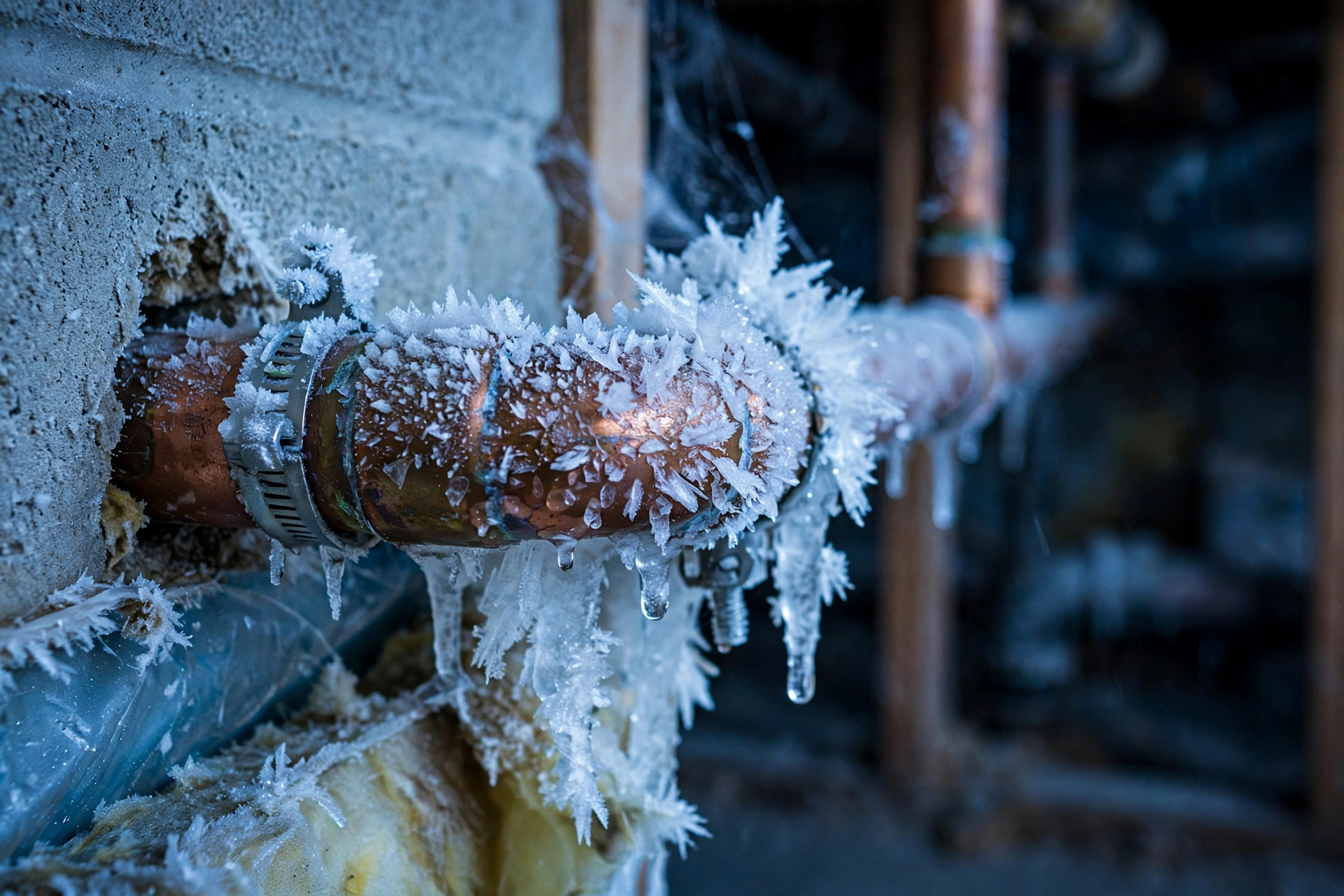
- Frost visible on exposed pipes in the basement
- Strange clanking or whistling when you turn on a tap
- One faucet works but another on the same floor doesn't
- Unpleasant odor from a drain (a frozen vent stack symptom)
How we thaw your pipes
1. Locate the freeze
We trace the line to find the exact frozen section — usually an exterior-wall run, a rim joist bay, or where the pipe passes through the garage wall, all common in South Jordan's 1980s–2000s builds. Finding the right spot first means we thaw the problem, not the whole house.
2. Thaw gradually
Controlled electric heat is applied starting from the faucet end and working back toward the frozen section. Gradual thawing keeps pressure from building behind the ice — the mistake that turns a frozen pipe into a burst one.
3. Inspect the full run
Once flow is restored, we check the line for hairline cracks the freeze may have opened and test fittings under pressure. Catching a weak joint now prevents a middle-of-the-night flood later.
4. Prevent the next freeze
We show you exactly which pipes are vulnerable and what fixes it — insulation, heat cable, or sealing the air leak that let subzero air onto the pipe in the first place.
Why South Jordan pipes freeze
South Jordan's freeze risk comes in week-long doses. Winter inversions park the valley below freezing day and night, and that's when pipes freeze — not during a single cold night, but during sustained cold that soaks through walls. The 1980s–90s homes with copper in exterior walls are the classic victims; Daybreak's newer PEX homes resist splitting better but still freeze solid at fittings and hose bibs. Homes on the west bench take extra canyon wind off the Oquirrhs, which drives cold into wall cavities faster. We see the same freeze points every January, which means we find yours faster.
Need frozen pipe thawing in South Jordan?
One call connects you with a local technician. No forms, no waiting.
(555) 123-4567📞 Call Now